

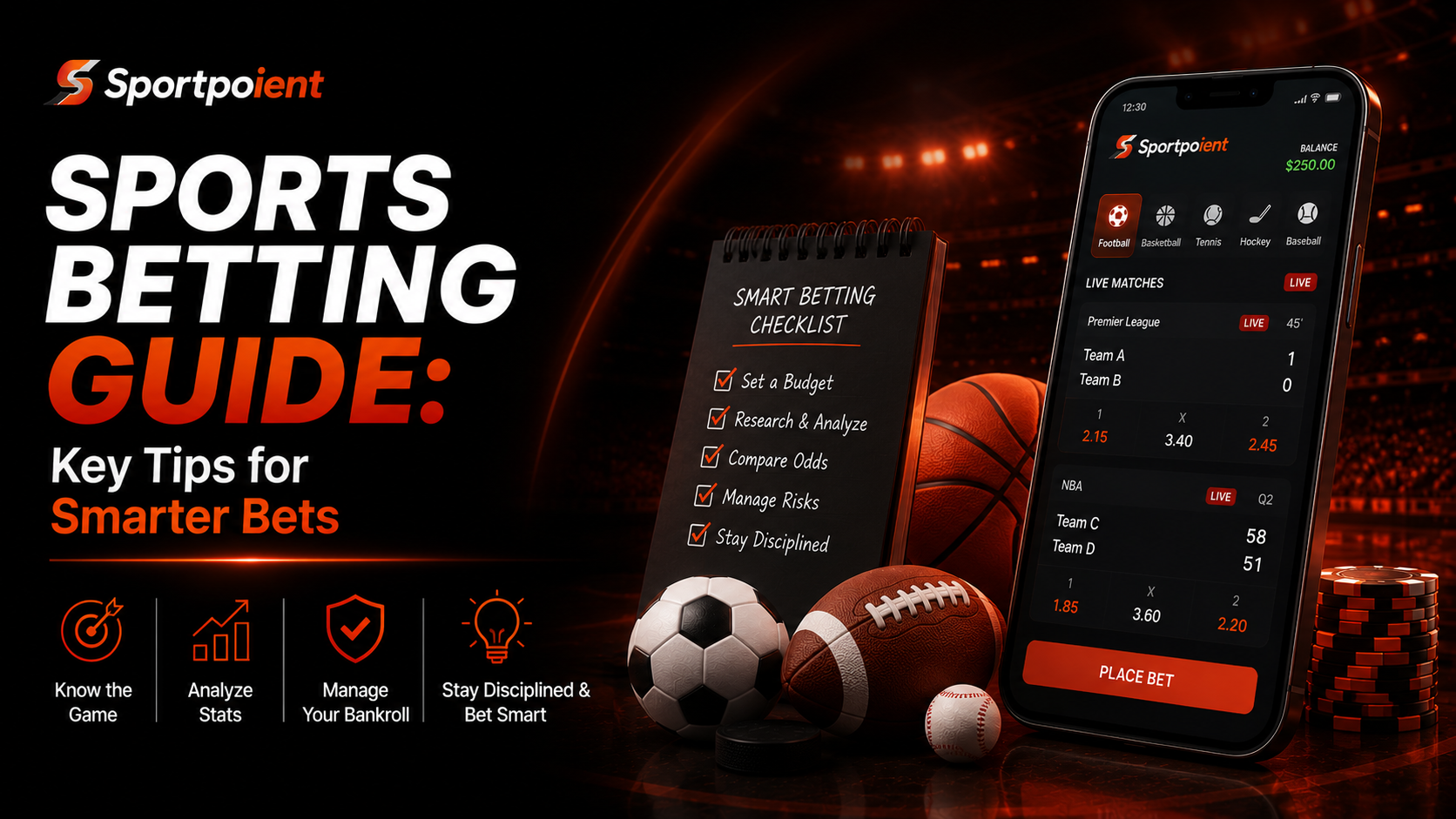
Sports Betting Guide: Key Tips for Smarter Bets
Sports betting is easier to access than ever, but easy access does not automatically lead to smart decisions. For beginners, the biggest challenge is not placing a bet – it is understanding what makes a bet worthwhile, how odds really work, and how to avoid the habits that quietly drain a bankroll over time.
That is where a practical sports betting guide matters. Instead of chasing hype, this guide focuses on the fundamentals casual bettors actually need: bet types, odds basics, bankroll awareness, line shopping, timing, and the common mistakes that separate disciplined bettors from frustrated ones.
At Sport Poient, we believe sports content should be useful, not confusing. That means simplifying betting concepts the same way we break down athlete performance, injuries, training habits, and game trends: clearly, responsibly, and with real-world context sports fans can use.
Sports Betting Guide: Key Tips for Smarter Bets
Sports betting is easier to access than ever, but easy access does not automatically lead to smart decisions. For beginners, the biggest challenge is not placing a bet – it is understanding what makes a bet worthwhile, how odds really work, and how to avoid the habits that quietly drain a bankroll over time.
That is where a practical sports betting guide matters. Instead of chasing hype, this guide focuses on the fundamentals casual bettors actually need: bet types, odds basics, bankroll awareness, line shopping, timing, and the common mistakes that separate disciplined bettors from frustrated ones.
At Sport Poient, we believe sports content should be useful, not confusing. That means simplifying betting concepts the same way we break down athlete performance, injuries, training habits, and game trends: clearly, responsibly, and with real-world context sports fans can use.
“In 2023, Americans legally wagered almost $120 billion on sports, up from $93 billion in 2022.”
“According to a 2026 survey by the National Council on Problem Gambling, nearly two-thirds (65%) of U.S. adults aged 21 and older reported participating in at least one form of gambling before age 21.”
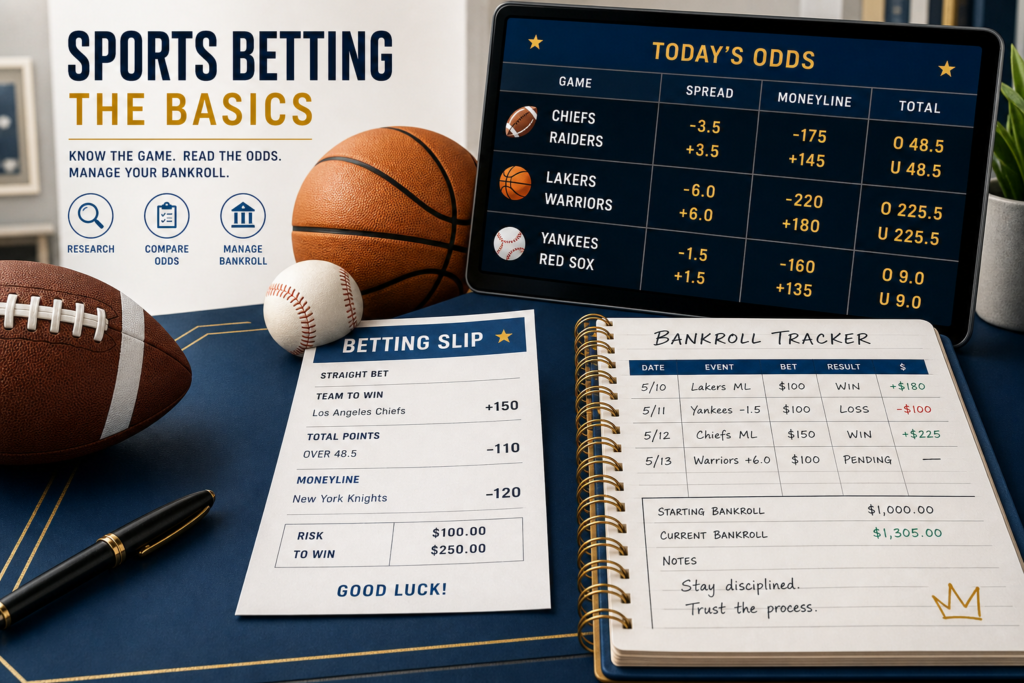
What a Good Sports Betting Guide Should Actually Teach You
Many beginner guides explain terminology but stop short of decision-making. A stronger guide should help you answer five practical questions before every wager:
- What exactly am I betting on?
- What do the odds imply?
- Is this the best line available?
- How much of my bankroll should I risk?
- Is this a smart bet, or just an emotional one?
That last question is the one most casual bettors skip.
A smart sports betting approach is not about predicting every game correctly. It is about making better decisions repeatedly, limiting avoidable mistakes, and staying disciplined enough to let small edges matter over time.
Start With the Core Bet Types
If you are new to betting, understanding the main markets is more important than learning advanced strategies. These are the bet types you will see most often.
Point Spread
A point spread evens out a matchup by giving the underdog a head start or asking the favorite to win by more than a set number.
- Favorite -6.5: must win by 7 or more
- Underdog +6.5: can lose by 6 or fewer, or win outright
Spread betting is common in football and basketball because it creates a more balanced market than simply picking the winner.
Moneyline
A moneyline bet is the simplest format: just pick who wins.
- Favorite -180
- Underdog +155
Favorites pay less because they are more likely to win. Underdogs pay more because they are less likely to win.
Totals (Over/Under)
A totals bet focuses on combined scoring rather than who wins.
- Over 47.5
- Under 47.5
You are betting whether the total points, goals, or runs scored in the game will go above or below the listed number.
Player Props
Props let you bet on player-specific outcomes, such as:
- passing yards
- points scored
- rebounds
- strikeouts
- touchdowns
- shots on target
These are popular because they feel more personal and often connect to how fans already follow stars and matchups.
Parlays
A parlay combines multiple bets into one ticket. Every leg must win.
- Higher payout
- Much harder to hit
- Bigger bookmaker edge in many cases
Parlays are exciting, but they should not be the backbone of a beginner betting strategy.
Futures
Futures are long-term wagers on outcomes like:
- championship winner
- MVP
- division title
- season win totals
These can be fun, but they tie up your money for weeks or months.
Sports Betting Odds Explained Simply
Odds tell you two things:
- how much you can win
- how likely the sportsbook believes the outcome is
For most U.S. bettors, odds are shown in American format.
American Odds Basics
| Odds Type | Example | Meaning | Profit on $100 Bet |
|---|---|---|---|
Positive | +150 | Underdog payout | $150 |
| Negative | -150 | Favorite price | $66.67 |
How to Read Them
- Positive odds show how much profit you win on a $100 stake
- Negative odds show how much you must risk to win $100
So:
- +200 means a $100 bet wins $200 profit
- -200 means you must risk $200 to win $100 profit
Why This Matters
Odds are not just payout labels. They also represent probability. If you do not understand the price, you cannot judge whether the bet has value.
A casual bettor often says, “I think this team wins.”
A smarter bettor asks, “Do these odds offer enough value for that opinion?”
Implied Probability: The Beginner Edge Most People Skip
This is one of the biggest content gaps in many sports betting articles: they explain odds, but not how to convert odds into decision-making.
Implied probability is the sportsbook’s estimated chance of an outcome based on the odds.
Quick Examples
| Odds | Implied Probability |
|---|---|
+100 | 50.0% |
+150 | 40.0% |
+200 | 33.3% |
| -110 | 52.4% |
| -150 | 60.0% |
| -200 | 66.7% |
If you believe a team has a 45% chance to win, and the sportsbook offers +150 odds, that could be a value bet because +150 implies only 40%.
That is the core idea behind sharper betting: not just picking winners, but comparing your opinion to the price.
The Most Important Habit: Shop for the Best Line
If two sportsbooks offer slightly different numbers on the same game, always compare before betting.
Example
- Sportsbook A: Eagles -3.5
- Sportsbook B: Eagles -2.5
That one point matters. If the Eagles win by 3, one bet loses and the other wins.
The same applies to moneylines and props:
- -115 is better than -125
- Over 24.5 points is better than Over 25.5
- +140 is better than +125
Why Line Shopping Is So Valuable
Over one bet, it may seem minor. Over a full season, getting consistently better prices can be the difference between being slightly profitable and slightly unprofitable.
This is one of the simplest “smart bettor” habits because it requires no advanced analytics – just discipline.
Bankroll Management: The Skill That Protects Everything Else
A lot of beginners focus on picks. Experienced bettors focus on survival and consistency.
Your bankroll is the total amount of money you have specifically set aside for betting. It should be separate from rent, food, bills, tuition, or emergency savings.
A Simple Unit System
A common beginner structure is:
- 1 unit = 1% to 2% of bankroll
If your bankroll is $500:
- 1% unit = $5
- 2% unit = $10
This keeps your bet sizing stable and reduces the damage from inevitable losing streaks.
Why Units Matter
Betting is volatile. Even strong bettors lose often. If you constantly change bet size based on emotion, confidence, or frustration, your results become harder to control.
Smart Beginner Rules
| Bankroll Rule | Why It Helps |
|---|---|
Bet in fixed units | Prevents emotional overbetting |
Keep most bets at 1 unit | Builds consistency |
Avoid “must-win” oversized bets | Protects against tilt |
| Track every bet | Reveals strengths and leaks |
| Separate betting funds from daily money | Reduces financial risk |
What Not to Do
- Double your next bet because you lost the last one
- Bet bigger on prime-time games just because they feel important
- Increase stake size after a hot streak without a plan
- Treat parlays as recovery tools
At Sport Poient, we often emphasize that strong sports habits – whether in training, performance, or betting – come from process, not impulse.
The Best Beginner Strategy Is Boring: Bet Fewer Games, Better
One of the most overlooked truths in sports betting is that you do not need action on everything.
Beginners often think more bets create more opportunity. In reality, more bets often mean:
- less research per wager
- more emotional decision-making
- more exposure to sportsbook hold
- more chances to chase losses
A smarter routine is to narrow your focus.
Better Approach
- Follow one or two sports closely
- Learn how lines move in those markets
- Understand common scoring patterns
- Track injuries, rest, and lineup news
- Wait for prices you actually like
This works especially well for fans who already follow a sport deeply. Your knowledge becomes more useful when it is concentrated.
Timing Matters More Than Beginners Realize
A strong sports betting guide should explain not just what to bet, but when to bet.
Bet Early When:
- you expect the market to move quickly
- injury news is likely to favor your position
- a number sits on an important threshold
- you have power ratings or a strong price opinion
Bet Later When:
- you need lineup confirmation
- player status is uncertain
- you are betting NBA or prop markets heavily affected by availability
- public overreaction may improve the line
Why This Matters in Different Sports
| Sport | Timing Insight |
|---|---|
NFL | Early-week numbers can offer value before market sharpens |
NBA | Late injury news can swing lines dramatically |
MLB | Starting pitcher confirmation and bullpen usage matter |
| Soccer | Team news, rest, and rotation can impact late value |
| Props | Best opportunities often disappear once injury news becomes public |
Good betting is not only about reading the matchup. It is also about understanding market timing.
How to Think About Value Instead of “Locks”
There are no true locks. That word is mostly a marketing shortcut.
A better framework is:
- Good team does not always mean good bet
- Bad team does not always mean bad bet
- A smart bet depends on price
Example
You may believe a favorite wins 70% of the time.
- At -150, that may be value
- At -250, it may be overpriced
Same opinion, different betting decision.
This mindset protects you from one of the biggest beginner mistakes: confusing confidence with value.
Common Mistakes That Cost Beginners Money
A useful sports betting guide should be honest about where most losses come from. It is often not from lacking sports knowledge. It is from avoidable behavior.
1. Betting Without Understanding the Market
Placing wagers before fully understanding spreads, totals, props, or juice leads to poor choices.
2. Chasing Losses
This is one of the fastest ways to blow up a bankroll. A loss should not automatically trigger another bet.
3. Overusing Parlays
Parlays are fun, but many beginners rely on them too heavily because the potential payout looks attractive.
4. Ignoring the Price
A pick is not enough. You need the best available number.
5. Betting Emotionally
Backing your favorite team, revenge narratives, highlight-driven hype, and social media “locks” often distort judgment.
6. Not Tracking Results
If you do not track your bets, you cannot tell:
- which sports you understand best
- whether props are helping or hurting you
- if your sizing is too aggressive
- whether you are actually profitable
7. Confusing Entertainment With Edge
Sometimes you are betting for fun. That is fine – as long as you know that is what you are doing.
The trouble begins when entertainment bets are disguised as serious strategy.
A Smarter Comparison of Popular Bet Types
| Bet Type | Best For | Beginner Difficulty | Risk Level | Key Tip |
|---|---|---|---|---|
Moneyline | Picking outright winner | Low | Medium | Watch the price on favorites |
Spread | Balanced team-based betting | Medium | Medium | Key numbers matter |
Total | Game flow opinions | Medium | Medium | Pace and matchup are crucial |
| Player Props | Focused player analysis | Medium | Medium to High | Compare books carefully |
| Parlay | Entertainment and small-stake fun | Low | High | Keep to 2 legs max if you must play |
| Futures | Long-term opinions | Medium | Medium | Do not tie up too much bankroll |
Sport-Specific Tips for Smarter Bets
A winning argument across strong competitor content is that each sport behaves differently. That is true – and beginners should not treat all markets the same.
NFL
- Key numbers matter more than in most sports
- Early lines can offer more value
- Market becomes efficient closer to kickoff
- Weather and injury reports can shift totals and sides
NBA
- Player availability is huge
- Back-to-backs and rest spots matter
- Late scratches can swing both sides and props
- Live betting can create opportunities if a favorite starts slowly
MLB
- Bullpen usage matters almost as much as the starter
- Underdogs can be live more often than beginners think
- Lineups and handedness splits matter
- Expensive favorites can be dangerous long-term
Soccer
- One goal changes everything, so prices matter a lot
- Team rotation and schedule congestion matter
- Totals and draw markets require patience
- Public perception of big clubs can inflate prices
Why Responsible Betting Belongs in Every Guide
This is another area many competitor pieces mention only briefly. A truly useful article should make it clear: smart betting is not just about making better picks. It is also about protecting your time, money, and mental bandwidth.
Signs You Need a Reset
- you are betting with money meant for essentials
- losses are affecting your mood for long periods
- you feel pressure to win money back quickly
- betting is becoming secretive
- you are wagering more often than planned
Healthy Guardrails
- set deposit limits
- use app time limits
- remove saved payment methods if needed
- take breaks after bad runs
- never bet under stress, anger, or intoxication
This matters because the point of a sports betting guide is not just to help readers wager – it is to help them wager more deliberately.
A Practical Beginner Checklist Before Any Bet
Use this quick process before locking anything in.
Pre-Bet Checklist
| Question | Yes/No |
|---|---|
| Do I understand this market fully? | |
| Have I checked multiple sportsbooks? | |
| Do I know why the line is set here? | |
| Am I betting based on value, not hype? | |
| Is the stake consistent with my bankroll plan? | |
| Would I still make this bet if my favorite team were not involved? | |
| Am I calm, clear-headed, and not chasing? |
If several answers are “no,” the best move may be no bet at all.
What the Best Competitor Content Usually Misses
After reviewing common sports betting educational content, several gaps stand out:
- too much focus on definitions, not enough on decision-making
- weak explanation of implied probability
- little emphasis on line shopping as a long-term edge
- not enough practical guidance on timing
- too little discussion of emotional betting behavior
- bankroll advice that is mentioned but not operationalized
That is where Sport Poient can be more useful to readers. Our editorial strength is translating sports complexity into readable, actionable content. Whether the topic is betting strategy, athlete recovery, nutrition, speed training, or trending sports analysis, the goal stays the same: make the subject easier to understand without watering it down.
Final Verdict
A strong sports betting guide should not promise guaranteed wins. It should help readers think more clearly, bet more selectively, and avoid the mistakes that most often lead to frustration.
If you remember only a few principles, make them these:
- understand the bet type
- learn how odds translate to probability
- always shop for the best line
- keep bet sizing disciplined
- avoid chasing losses
- focus on value, not hype
That is how smarter betting starts.
If you want sports content that goes beyond headlines – and actually helps you understand betting concepts, athlete performance, sports trends, and practical game analysis – Sport Poient is the place to keep learning. Follow Sport Poient for accessible, expert-driven sports coverage that helps you stay informed and make better decisions on and off the scoreboard.