
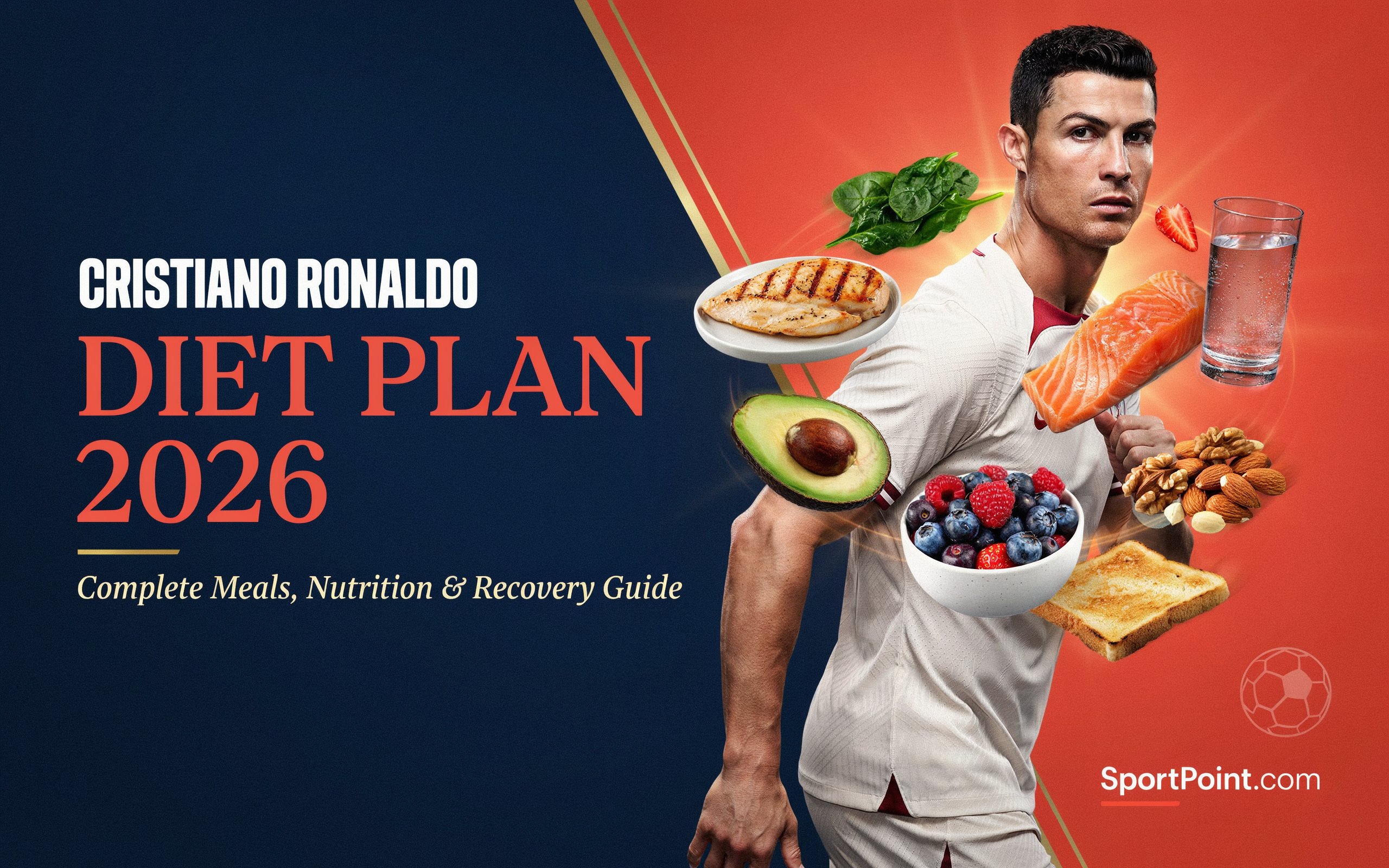
Most athletes slow down by their late 30s. Cristiano Ronaldo hasn’t. A big part of that comes down to food — not a fad, not a quick fix, just a system he’s followed for years. The Cristiano Ronaldo diet plan isn’t built on restrictions or trends. It’s built on repetition: the same quality ingredients, the same meal spacing, the same discipline, day after day.
This guide breaks down what’s commonly reported about how he eats — from his first meal to his last — and why each part of the Cristiano Ronaldo diet plan lines up with what his body actually needs to perform at the top level into his forties.
Table of Contents
ToggleWhat Makes the Cristiano Ronaldo Diet Plan Different
Strip away the headlines and the Cristiano Ronaldo diet plan comes down to five habits:
- Lean protein at every meal — fish, chicken, eggs
- Smaller meals, more often — instead of three large ones
- Strict hydration — water and electrolytes over everything else
- Almost no processed food — fresh, simple ingredients only
- Balanced macros — protein, carbs, and fat matched to training load
None of this is exotic. That’s the point. Consistency, not complexity, is what makes the Cristiano Ronaldo diet plan work over a 20-year career.
Why He Eats 5–6 Smaller Meals a Day
Rather than three big meals, Ronaldo spreads his food across five to six smaller ones, roughly every 3–4 hours. This is one of the most distinctive parts of the Cristiano Ronaldo diet plan, and it’s not just a preference — it solves a real problem for athletes.
Benefit | Why It Matters |
Stable energy | No mid-afternoon crash before evening training |
| Faster recovery | Steady protein supply for muscle repair |
| Easier digestion | Smaller portions mean less bloating before sessions |
| Fewer hunger spikes | Reduces the temptation to overeat at any single meal |
This meal rhythm keeps his body constantly supplied with what it needs, which matters more the closer you get to game day.
Breakfast: Setting Up the Day Right
Breakfast in the Cristiano Ronaldo diet plan is simple and protein-forward — nothing heavy, nothing that slows him down before training. Typical choices include:
- Eggs and lean ham
- Low-fat yogurt
- Fresh fruit
- Whole grains on lighter days
It’s not a glamorous breakfast. It’s a functional one — built to fuel the morning without weighing him down.
Smart Snacking Between Meals
Snacks bridge the gap between main meals without derailing the rest of the day. Common picks include avocado, nuts, fresh fruit, and yogurt — all chosen for staying power rather than a quick sugar hit.
Lunch: Built for Recovery, Not Just Refueling
Lunch is where the Cristiano Ronaldo diet plan leans hardest into recovery. Lean proteins like chicken and fish, paired with vegetables and whole grains, give his body what it needs to repair muscle and stay sharp for afternoon sessions or matches.
Why Fish Shows Up So Often
Fish is one of the most consistent elements of the Cristiano Ronaldo diet plan tuna, cod, sea bass, and swordfish appear regularly across his meals. The appeal is straightforward:
- High-quality, low-fat protein
- Omega-3s that help reduce inflammation
- Easier digestion than heavier meats
- Strong support for long-term joint and recovery health
For an athlete pushing his body daily, fish does a lot of nutritional work in a single meal.
Evening Meals: Two Smaller Dinners
Instead of one big dinner, Ronaldo splits his evening into two lighter meals protein and vegetables first, then a smaller serving of light carbs and protein later. This approach inside the Cristiano Ronaldo diet plan supports digestion and keeps overnight recovery from being interrupted by a full stomach.
Getting the Macros Right
Macronutrient | Role in His Plan |
Protein | Muscle repair and growth |
| Carbohydrates | Fuel for training and matches |
| Healthy fats | Hormone balance and joint support |
This balance is what separates the Cristiano Ronaldo diet plan from a generic “clean eating” routine every macro has a job to do.
Hydration: The Non-Negotiable
Ronaldo is famously strict here. Water intake stays high all day, electrolytes come in during and after training, sugary drinks are off the table, and alcohol is rare to nonexistent. Even his public moments like clearing soda bottles off a press table — reflect how seriously hydration is treated as part of the Cristiano Ronaldo diet plan.
Supplements That Fill the Gaps
Whole food does most of the work, but a few supplements round things out:
- Protein shakes post-training for faster recovery
- Multivitamins to cover micronutrient gaps
- Omega-3s for joint health under heavy training loads
These aren’t replacements for real food — they’re support for the harder training weeks.
Cheat Meals: Yes, Occasionally
Even strict plans need flexibility. Ronaldo’s version of a cheat meal is modest — a slice or two of pizza, sometimes a small dessert. Nothing excessive, nothing that undoes the rest of the week. Moderation, even in indulgence, is still part of the discipline behind the Cristiano Ronaldo diet plan.
How the Diet Lines Up With Training
Phase | Focus |
Pre-workout | Carbohydrates for sustained energy |
Post-workout | Protein for muscle recovery |
Match day | Light, easily digestible meals |
Nothing in the Cristiano Ronaldo diet plan exists in isolation — every meal is timed around what his body is about to do or just finished doing.
Benefits and Trade-Offs
- Consistent energy throughout the day
- Faster recovery between sessions
- Sustainable body composition over the long term
Trade-offs:
- Requires real discipline to maintain
- Six meals a day takes planning and time
- Not the easiest starting point for beginners
The Bottom Line
There’s no secret ingredient in the Cristiano Ronaldo diet plan — just lean protein, real food, careful timing, and water instead of everything else. What makes it effective isn’t novelty; it’s that he’s done it the same way, consistently, for years. That’s the actual lesson here: longevity in sport comes from daily habits repeated without shortcuts, not from any single meal or supplement.
Quick FAQ
How many meals does Ronaldo eat per day? Around five to six smaller meals, spaced roughly every 3–4 hours.