

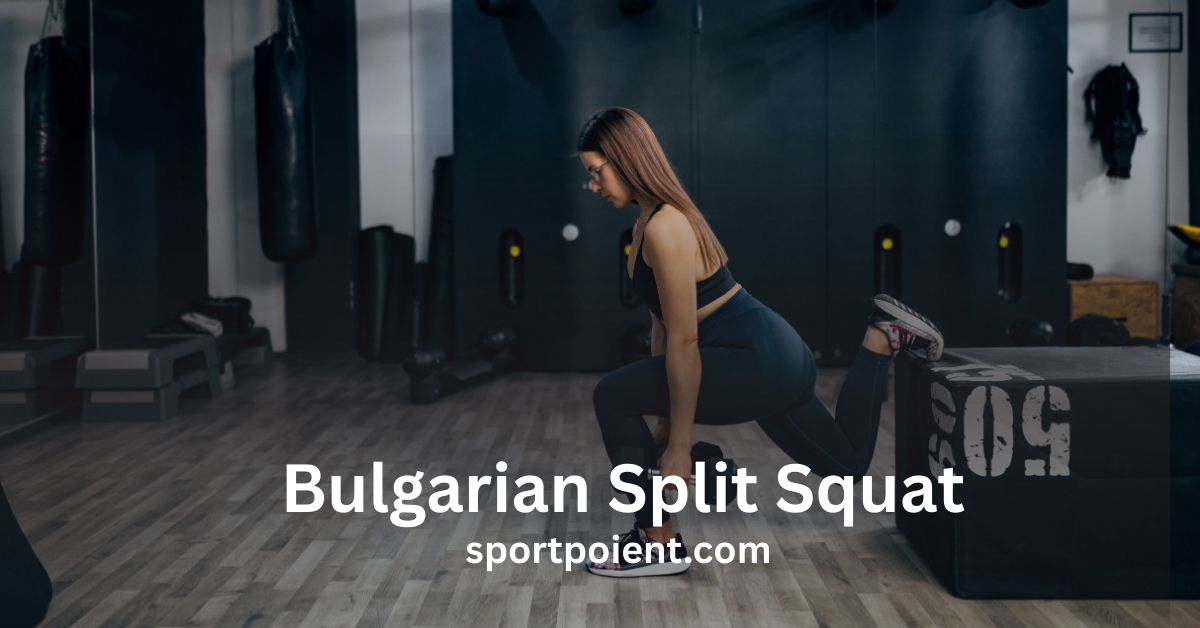
One of the best single leg exercises for increasing stability, strength, and balance is the Bulgarian split squat.Using dumbbells makes it even more powerful, targeting your quads, hamstrings, and glutes while improving core control.
Unlike traditional squats, this move isolates each leg, helping correct muscle imbalances and boosting athletic performance. Whether you train at home or in the gym, it’s a simple yet challenging workout for stronger, well shaped legs.
What Is the Bulgarian Split Squat? (Rear Foot Elevated Single Leg Squat)
Bulgarian split squat is a lower body exercise where you put your back foot on a bench or chair and work the front leg through a squat motion. Unlike a normal squat, this move shifts the focus onto one side at a time, making it a true unilateral drill. It feels like a mix between a lunge and a single leg squat, but with better balance and control.
Honestly, the first time I tried this in the gym, my front leg burned out quicker than I expected. That’s the point though this move forces your glutes, quads, and stabilizers to work extra hard while keeping your core muscles tight. Many lifters like it because it’s easier on the lower back compared to heavy back squats.
Bulgarian Split Squat vs regular squat: key differences in stance, load, and balance
When you compare the bulgarian split squat to a regular squat, the differences are clear. A normal squat uses both legs together, giving you more stability and letting you load heavy with a barbell. Split version shifts almost all the effort to the front leg, which challenges balance and reduces how much weight you can use.
In a gym setting, you’ll notice the stance is different too. Your center of gravity shifts when your rear foot is raised, so balance becomes a component of the exercise. I remember wobbling a lot in my early sets, but with practice it smooths out.
Synonyms: RFESS, rear foot elevated split squat, one leg squat variation
The rear foot elevated split squat (RFESS) is another name for the Bulgarian split squat. Some coaches just call it a one leg squat variation or simply the bulgarian squat. You might even hear “db split squat” in gyms when people use dumbbells instead of a bar.
Whatever the name, it’s the same move: back foot on the bench, front foot planted, and squat down. Personally, I find the term RFESS sounds technical, but most gym buddies just say “Bulgarian” and everyone knows what it means.
Brief background: why lifters and athletes use it
Athletes and lifters use the bulgarian split squat because it builds strength in the quads and glutes without putting too much pressure on the spine. In sports, you rarely push with both legs evenly like in a back squat. This exercise simulates sprinting, cutting, or jumping primarily off one leg.
So when a football player adds 3 sets of these after squats, it’s not random it’s because the hamstring, glute, and quad activation transfers directly to performance. Honestly, after doing these consistently, I noticed my jumps felt stronger and my balance got better on single leg drills.
Muscles Worked
Bulgarian split squat hits multiple leg muscles at once, making it one of the best unilateral moves in strength training. Your glutes, quads, and hamstrings do most of the lifting, while smaller stabilizers like the adductors and calves keep your body steady.
At the same time, your core muscles stay engaged to hold posture and stop your torso from tipping. Unlike a normal squat, this move forces the front leg to carry the load, which helps fix muscle imbalances. Honestly, after adding 3 sets of this one leg variation into my routine, I noticed better balance and more power in my jumps.
Glutes (gluteus maximus/medius) How the lift is driven by hip extension
Glutes are heavily activated, especially when you lean forward slightly as you descend. The gluteus maximus powers hip extension, pushing you back to the top, while the gluteus Medius prevents your hips from dropping side to side. Without this support, you’d lose balance or feel uneven pressure on the front leg. Casual gym note when I first held a heavy dumbbell on each side, my glutes lit up so much that sitting the next day felt like an extra workout.
Quads knee dominant mechanics
Quadriceps drive the movement when you keep your chest tall and your front knee bending deep. This makes the exercise feel closer to a lunge but with more stability since the back foot is fixed on a bench or box. Quads extend the knee and take on most of the load if your stance is shorter. You’ll notice this quad burn during high rep sets, especially if you hold a dumbbell by your sides. Personally, I find my thighs start shaking around rep eight, even when the weight isn’t that heavy.
Hamstrings & adductors stabilization and hip control
Hamstrings and adductors act like anchors in this exercise. While they don’t dominate the lift, they steady the hip joint and guide smooth movement through the full range of motion. They stop your front knee from caving in and add stability when fatigue kicks in. The adductors also help keep your torso upright by preventing side shifts. From my own training, whenever I rushed reps, my hamstrings and inner thighs screamed louder than my quads that was a sign they were doing more work to hold everything in line.
Calves & core balance, bracing, and anti rotation
Your calves help control ankle stability, especially as your front foot presses into the ground. Meanwhile, the core muscles brace tightly to stop any twisting or leaning during the movement. This anti rotation role is huge because holding heavy dumbbells on each side can easily pull your body off center. Tight core also protects the lower back and keeps energy focused on the front leg. To be honest, I became aware of how much my abs and calves had to work to keep me balanced when I started training barefoot. It felt less like a leg exercise and more like a full body and core challenge.
Benefits of the Bulgarian Split Squat
Bulgarian split squat offers more than just leg strength. It can grow glutes and quads, fix muscle imbalances, and improve athletic balance. Unlike a back squat, this one leg move builds serious power while being easier on the spine. Many lifters use it to train both strength and mobility, and athletes like how it mirrors real sports movements. Honestly, when I added this lunge variation into my weekly plan, I noticed not only stronger legs but also better control in jumps and sprints.
- Strength & hypertrophy for leg muscles (glute or quad biased)
- Balance, coordination, and unilateral symmetry
- Athletic carryover (acceleration, cutting, jumping)
- Back friendly squat alternative and rehab applications
- Strength & hypertrophy for leg muscles (glute or quad biased)
This exercise builds both strength and muscle growth depending on how you adjust your stance. A glute biased version uses a forward lean and longer stride, hammering the back of your hips. A quad biased setup with a shorter stride and upright torso targets the thighs more.
Either way, it’s a reliable way to load one side at a time without the same fatigue as heavy back squats. Personally, I’ve hit some of my best quad pumps after just 3 sets of dumbbell bulgarian split squats.
Balance, coordination, and unilateral symmetry
Because the front leg carries the load, the move naturally fixes strength differences between sides. It teaches coordination, forces you to stay stable, and strengthens the smaller stabilizers you might overlook in traditional squats.
At first, you’ll probably wobble and fight for balance everyone does. I remember leaning against a wall on my first attempt, but after a few weeks, my balance improved dramatically, and both legs started to feel equally strong.
Athletic carryover (acceleration, cutting, jumping)
Athletes love the bulgarian split squat because it trains the same single leg power used in running, cutting, and jumping. When the front foot drives into the floor, the quads and glutes fire just like they do in a sprint. It’s basically sports specific strength training disguised as a leg workout.
Honestly, after sticking with this move, I could feel my first step quicken on the football field and my jumps got more explosive during basketball sessions.
Back friendly squat alternative and rehab applications
For people who struggle with back squats, this move can be a lifesaver. It doesn’t compress the spine as much, especially if you use dumbbells instead of a barbell. That makes it a solid choice for lifters with lower back concerns or for rehab after injury.
In rehab settings, coaches often use bodyweight versions to retrain balance and joint stability. I’ve seen a buddy rehabbing a knee injury with light db split squats, and it helped him build back confidence without pain.
Setup & Equipment
Getting the setup right makes the bulgarian split squat smoother and safer. You’ll need a stable surface like a bench or chair to rest your back foot, and enough space to adjust your stride. Small tweaks in setup change whether your quads or glutes take the lead.
I learned the hard way starting too close to the bench made my knees ache, while stepping out a little further felt way more natural. The right gear also helps. Some lifters add a heel wedge or special shoes for comfort, while others keep it simple with just bodyweight. Honestly, once you dial in your stance and equipment, the move feels much more controlled.
Bench/box height and distance from the front foot
The ideal bench or box height is usually around knee level. Too high, and your rear foot feels jammed; too low, and you lose the natural angle. Position your front foot far enough forward so your front knee tracks over the toes without sliding way past them.
A good test when your back knee touches the ground, your shin should stay vertical. I once set up too close and felt all the stress in my knee instead of my quads and glutes, so now I always check foot distance first.
Foot placement stride length, stance width, toe angle
Your stride length controls muscle focus: a longer step hits the glutes and hamstrings, while a shorter step lights up the quads. Keep a natural stance width about hip distance to avoid wobbling. Toes should be pointed slightly outward to conform to your natural squat pattern.
If you go too narrow or keep your feet in a straight line, balance becomes way harder. Honestly, I tried the “tightrope” stance once and nearly tipped over mid rep.
Load options: dumbbell, kettlebell, barbell, safety bar, Smith machine, bodyweight
- Dumbbell bulgarian split squat: simple, keeps your arms free
- Kettlebell: similar feel, often held in goblet style
- Barbell: heavier loading, more advanced
- Safety squat bar: friendlier on the shoulders and back
- Smith machine: extra stability, good for high reps
- Bodyweight: perfect for beginners or warm ups
I started with bodyweight, then moved to one leg squat dumbbell style before touching the barbell. That step by step loading made progress feel natural.
Shoes, heel wedge, and straps when they help
Flat training shoes work best for stability. Running shoes with thick soles can throw off balance. A heel wedge or small plate under the front foot helps if your ankles lack mobility or if you want extra quad focus.
Some lifters use straps when holding heavy dumbbells, so grip doesn’t limit their reps on each leg. Honestly, I switched to flat shoes one day and instantly felt more grounded no more wobbling around like on soft sneakers.
How to Perform a Bulgarian Split Squat (Step by Step)
The bulgarian split squat looks simple, but the details matter. Good setup, controlled lowering, and solid bracing turn it into a powerful unilateral exercise. Many lifters rush the form and miss out on the real benefits for the glutes, quads, and hamstrings.
Honestly, I made that mistake too my first few weeks were more wobbly lunges than proper squats. Follow these steps carefully and you’ll notice how much smoother and stronger each rep feels.
One leg setup and bracing cues
- Place your back foot on the bench at about knee height.
- Step the front foot forward until you feel stable, not cramped.
- Keep your torso upright, brace your core muscles, and grip the floor with the front foot.
- Hold a dumbbell or go bodyweight either works.
- Before moving, take a breath and lock in balance.
I always check stance by lowering once without weight to see if my front knee tracks correctly.
Eccentric control, depth standards, and concentric drive
Lower yourself slowly, keeping tension in the front leg. Aim for the back knee to touch the ground lightly without slamming. That controlled eccentric phase makes the glutes and quads fire harder. Drive back up through your front foot with steady power once you hit depth.
I used to bounce off the floor out of impatience, but fixing that mistake gave me way more muscle activation and stability.
Maintain Alignment and Track Knee Over Toes
Keep your head neutral, eyes forward, and chest lifted. Your ribcage should stay stacked over your pelvis, not flaring out. Watch your front knee it should track in line with your toes instead of caving inward.
If your pelvis twists, the rear leg is taking over, which kills the purpose of this move. Honestly, recording myself once showed my knee drifting inward, and correcting it instantly improved my balance.
Breathing, tempo, and range of motion checkpoints
Inhale as you lower, keeping your core tight, then exhale as you push back up. A 3 1 1 tempo (3 seconds down, 1 pause, 1 up) works great for clean control. Don’t cut the range of motion aim for your thigh to reach parallel and your back knee close to the floor.
If you stop short, you’ll miss the stretch in the quads and glutes. I once rushed sets with half reps, and the results were nowhere near as good as when I slowed it down.
Coaching Cues & Troubleshooting Form
The bulgarian split squat can feel awkward at first, but with small adjustments, you’ll get more out of every rep. Proper angles, steady balance, and attention to details like foot setup make a huge difference. I’ve seen lifters transform this move from shaky to smooth in just a few sessions once they followed these cues.
Glute biased vs quad biased: torso angle, shin angle, foot position
Lean your torso slightly forward, take a longer stride, and allow your shin to remain more vertical to make it glute biased. This loads the hips and makes your glutes work harder. For a quad focus, keep your torso upright, shorten the stride, and allow the shin to push forward as the front knee bends deeper. Honestly, I use both glute days get the long stride, quad days get the upright stance.
Back foot position (toes vs laces) and keeping tension on the front leg
Your rear foot can rest with the laces down or toes tucked, depending on comfort. I prefer laces down because it takes pressure off the ankle. No matter the style, the goal is to keep tension in the front leg. If the back leg starts pushing, you’ve turned it into a lunge instead of a squat. I learned this when my back foot did half the work and my front leg never got sore wrong move.
Balance solutions: stance, gaze, supports, and tempo adjustments
Balance is often the hardest part. Instead of walking a tightrope, begin with a position that is about hip-width apart. Fix your gaze on a spot ahead to steady yourself. Use supports like a wall or stick if you wobble early on. Slowing down the tempo especially the lowering phase also helps you stay in control. Personally, I once tried rushing through sets, and it felt like circus balancing instead of strength training. A calm pace fixed that instantly.
Common Mistakes and How to Fix Them
The bulgarian split squat is powerful, but only if you avoid common mistakes.Many newcomers (and even seasoned lifters) develop bad habits that restrict their progress or put them at risk for harm. The most common mistakes and their solutions are as follows:
- Front knee collapsing inward
- Heel lifting / losing full foot pressure
- Bouncing off the bottom or cutting depth short
- Stance too narrow/too close; back leg takeover
- Overarching the lower back or rib flare
- Using too much weight and losing control
Honestly, I’ve done most of these at some point, and cleaning them up made every rep smoother.
Front knee collapsing inward (valgus)
When the front knee caves in, it strains the joint and reduces quad and glute activation. To fix it, focus on pushing the knee out in line with your toes and keep your core tight. Adding light band work around the knees helps reinforce proper tracking. I once filmed my set and realized my left knee kept caving no wonder it felt unstable.
Heel lifting / losing full foot pressure
If your front heel lifts, you lose stability and shift load into the knee.Consider “driving through the entire foot,” paying particular attention to the heel and midfoot. For improved ground contact, some lifters benefit from training barefoot or wearing flatter shoes. When I swapped out squishy runners for flat soles, my balance improved instantly, and the pressure felt even across the foot.
Bouncing off the bottom or cutting depth short
Dropping too fast or bouncing at the bottom cheats your muscle activation and risks knee pain. Lower yourself slowly until your back knee nearly touches the floor, then drive up with control. Avoid cutting depth short, as it reduces hamstring and glute engagement. I used to rush reps, but slowing down made the burn far more effective.
Stance too narrow/too close; back leg takeover
A narrow stance turns the move into a balancing act, while standing too close shifts work to the back leg. Stepping the front foot forward just far enough for stability and comfort will fix it. A simple test when you lower down, the front shin should stay vertical, not pushed way forward.
Overarching the lower back or rib flare
Leaning back and flaring ribs overloads the spine. Keep your ribcage stacked over the pelvis and brace your core. A small forward lean is fine, but avoid arching. When I first used a barbell, I caught myself arching to stay upright, and it made my back sore. Bracing fixed it immediately.
Using too much weight and losing control
Going too heavy ruins form and turns controlled reps into shaky lunges. Start lighter, nail your range of motion, then add weight gradually. I remember failing mid set with heavy dumbbells and realizing my ego was ahead of my strength. Since then, I build up weight only after perfect form feels solid.
Safety Tips & Contraindications
The bulgarian split squat is safe when done with proper form, but like any unilateral exercise, there are risks if you push through pain or skip prep. Honestly, I’ve had days where a small tweak in stance saved me from nagging joint stress. Here’s how to train smarter and know when to swap this move for other options.
Knee, hip, and SI joint considerations; pain free range modifications
Reduce the range of motion or change your posture until your front leg is pain-free if you experience knee pain. The same goes for hip or SI joint discomfort avoid forcing depth. Keep your front knee tracking with the toes, and let the back knee touch the ground lightly.
I once ignored hip tightness and pushed full depth; the next day my hip flared up. Now, I only go as deep as my joints allow comfortably.
Warm up and mobility: hip flexor, ankle dorsiflexion, adductor prep
Warm up with dynamic drills before loading heavy. Hip flexor stretches, ankle dorsiflexion drills, and adductor openers make the movement smoother.
A few minutes of bodyweight split squats or light lunges can also prep the quads and glutes. Personally, if I skip hip flexor work, my rear leg feels stiff and throws off balance. A little mobility work makes the first set feel twice as good.
When to choose split squat or step up instead
If the bulgarian split squat bothers your joints or balance, swap it for a regular split squat with both feet on the floor, or try step ups. Both target the same leg muscles with less strain. Step ups are especially great if you want a similar unilateral load without stressing the rear foot. I used step ups during a knee flare up, and it kept my training consistent without pain. Sometimes it’s better to go with the simpler version.
Variations & Progressions
The bulgarian split squat has plenty of variations to match different levels and goals. You can start with simple bodyweight work and progress toward heavy loaded versions.
Each tweak changes the challenge, whether it’s shifting muscle focus, adding balance demands, or cranking up intensity. Honestly, I’ve rotated through many of these in my own training, and each one hits the legs in a slightly new way.
Bodyweight and goblet Bulgarian split squat
Begin with bodyweight to nail balance and technique. Once steady, add a dumbbell or kettlebell in goblet style at the chest. This keeps the weight centered, helping you focus on form. When I first tried goblet style, it gave me enough load for a burn without wrecking balance.
Bulgarian split squat with dumbbells (one versus two dumbbells)
Holding one dumbbell at your side or shoulder makes the core muscles fight rotation, while two dumbbells balance the load evenly. Both options work well one challenges stability, two allow heavier weight. I still use the single one leg squat dumbbell style when I want more core involvement.
Barbell and front rack options; safety bar variation
Similar to a back squat, a barbell across the back puts a lot of strain on the legs. A front rack or safety squat bar shifts demand forward, keeping the torso upright. These versions suit lifters chasing strength. I remember moving from dumbbells to a barbell it felt awkward at first, but it made me stronger fast.
Smith machine and landmine versions
The Smith machine offers fixed balance, great for high rep sets or rehab work. The landmine setup adds a forward load angle, making it easier to control. Both reduce balance demands, so you can push higher volume safely. I’ve used Smith machine split squats on leg day finishers they’re brutal but effective.
Deficit/elevated front foot, heel elevated, long stride
Range of motion is increased by elevating the front foot, which crushes the quadriceps and glutes. A heel raise makes it more quad focused. A longer stride emphasizes the glutes and hamstrings. Each tweak changes the feel dramatically. Honestly, the first time I tried a deficit, I couldn’t believe how deep the stretch felt.
Tempo, paused, 1.5 rep, rest pause, and drop set protocols
Slowing tempo, adding pauses at the bottom, or using 1.5 reps builds crazy tension. Rest pause and drop sets push past fatigue for extra growth. These tweaks work well for hypertrophy blocks. I’ve done paused reps before three seconds at the bottom feels like forever, but the payoff is worth it.
Assisted/TRX for beginners; plyometric progressions for athletes
Beginners can use a wall, stick, or TRX straps to steady themselves while learning. Athletes, on the other hand, can add jumps or hops for power. Plyometric Bulgarian split squats build speed and explosiveness. I once added jump split squats before basketball season, and my first step quickness noticeably improved.
Programming: Sets, Reps, and Weekly Frequency
The bulgarian split squat fits almost any program whether your goal is muscle growth, strength, or just solid unilateral balance.
The key is knowing how many sets and reps to use, how often to train, and how to adjust intensity. Beginners might use it twice per week, while advanced lifters can program it heavier or as an accessory on leg days. Honestly, I’ve used it both ways light bodyweight reps at home and heavy dumbbell sessions in the gym and both delivered results.
Hypertrophy templates for glutes and quads
For building size, aim for 3 4 sets of 8 12 reps per leg. Use a stance that matches your goal: long stride for glutes, short stride for quads. Rest 60 90 seconds. I once did 3 sets of 10 dumbbell bulgarian split squats after squats and couldn’t walk straight the next day that’s how effective it can be for hypertrophy.
Strength blocks and progression models (load, reps, tempo)
For strength, focus on heavier loads with 3 5 sets of 5 6 reps. Progress by gradually adding weight or slowing the tempo. Some lifters also use 1.5 reps or pauses at the bottom for extra intensity. Personally, adding just 5 kg each week to my db split squat quickly boosted single leg strength.
Where it fits on leg day with squat or deadlift
The bulgarian split squat works well after heavy back squats or deadlifts as an accessory move. It brings balance and targets muscle imbalances. If you train legs twice a week, you can do squats on one day and split squats on the other. I like pairing them with Romanian deadlifts quads and glutes both get hammered.
At home and minimal equipment programming
With no gear, just use bodyweight for 3 4 sets of 12 15 reps. If you’ve got one dumbbell, switch sides each set. I remember training at home during lockdown, using a chair and a backpack loaded with books it worked surprisingly well for keeping my legs strong.
Bulgarian Split Squat vs Alternatives
| Exercise | Setup | Muscle Focus | Stability | Loading Potential | Best Use Case |
| Bulgarian Split Squat | Back foot on bench, front foot on floor | Quads and glutes depending on stance | Moderate, balance needed | High with dumbbells/barbell | Balance + strength + hypertrophy |
| Split Squat | Both feet on floor, split stance | Quads and glutes evenly | Easier balance | Moderate | Beginners or joint friendly |
| Lunge (Forward/Reverse/Walking) | Step forward/back each rep | Quads, glutes, hamstrings | Higher balance demand | Light moderate | Athletic mobility and conditioning |
| Step Up | Step onto a bench or box | Quads and glutes | Easier than split squat | Moderate high | Power, rehab, at home training |
| Pistol Squat | One leg, full squat, no support | Quads, glutes, core | Very difficult | Bodyweight only (advanced) | Mobility, advanced skill work |
Split squat versus Bulgarian split squat (rear foot on floor)
The split squat keeps both feet on the ground, making it easier for balance but less demanding on stabilizers. The bulgarian split squat shifts more work onto the front leg by elevating the rear foot, creating deeper quad and glute activation. I used split squats early on, but once I switched to Bulgarians, the burn in my front leg doubled.
Bulgarian split squat vs lunge (forward/reverse/walking)
Lunges add a step each rep, so they train balance and coordination more dynamically. The bulgarian split squat stays stationary, allowing more control and heavier loading. Lunges are great for athletic conditioning, while Bulgarians are better for pure strength. I like using lunges on conditioning days, but for growth, Bulgarians hit harder.
Bulgarian split squat vs step up
A step up targets the same muscles but is usually easier on balance. It also mimics climbing or sprinting better. The bulgarian split squat lets you load heavier and emphasizes hip mobility. Honestly, I used step ups during a minor ankle issue because they felt safer, then went back to Bulgarians when balance improved.
Pistol squat (single leg squat) and the Bulgarian split squat
The pistol squat is a full single leg squat without support, demanding crazy balance and mobility. The bulgarian split squat is more accessible, allowing external load with dumbbells or barbell. Pistols are great for bodyweight skill, but for strength and hypertrophy, Bulgarians win. I’ve tried pistols, but they felt more like a circus trick Bulgarians gave me real strength.
Sample Workouts (Plug and Play)
The bulgarian split squat can fit into beginner, intermediate, or advanced programs. Whether you train at home with a dumbbell or in the gym with a barbell, there’s always a version that works. Honestly, I’ve used this move as both a warm up and a main lift it adapts to almost any plan.
Beginner one leg dumbbell routine
Start light with 3 sets of 10 12 reps on each leg. Use a single dumbbell bulgarian split squat (goblet style) or just bodyweight. Rest 60 seconds between sets. Focus on balance, smooth control, and full range of motion. I used to practice these barefoot at home with a chair it built confidence fast.
Intermediate hypertrophy day (glute biased and quad biased days)
Do 4 sets of 8 10 reps per side. Lean forward a little and take a longer stride if you are glute biased. Reduce your stride length and maintain a more erect posture if you are quad biased. Combine with leg presses or Romanian deadlifts. To be honest, I left the gym limping from the pump I got from combining these with leg extensions.
Advanced strength/athletic performance session
Go heavy: 5 sets of 5 6 reps per leg using barbell or safety squat bar. Add tempo (3 seconds down) or pauses for control. Pair with jumps or sprints for athletes. I remember supersetting Bulgarians with box jumps it felt brutal but explosive strength improved quickly.